To get us through February, we're about to have one zillion posts about gardening. So, so green! In cold, cold February!

Now that we're firmly into winter, all the seed catalogs are out and garden planning has begun! This is how we get through winter and mud season. This post documents my approach to raised bed gardening. I take a pseudo
hugelkultur approach in which I fill much of a traditional raised bed with tree limbs and other organic matter that will decompose over time. This varies a bit from my
wildflower stump garden as the beds have walls.
- Build raised beds, staple-gun hardware cloth to the bottom (keeps the moles, voles, etc. out).

- Ensure raised bed surface is even. My land is sloped, so I have to dig into the slope.

- Mix organic matter in with the dirt for the raised bed foundation. It'll rot over time and improve the soil.
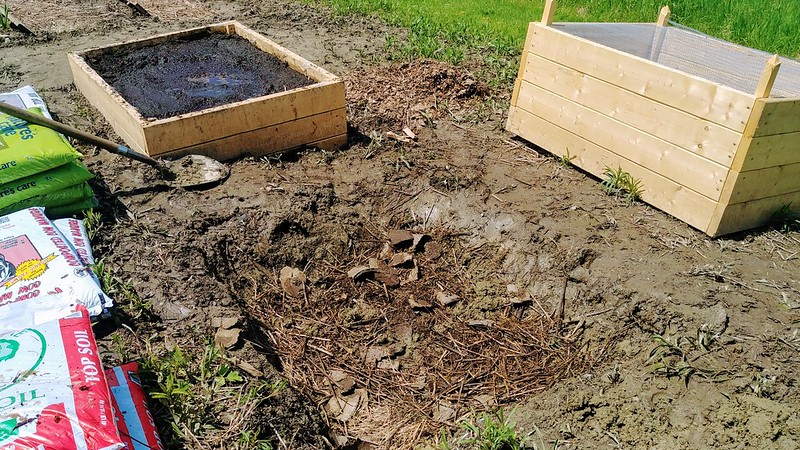
- Place raised beds in their hole, put in a layer of sticks mixed with dirt.
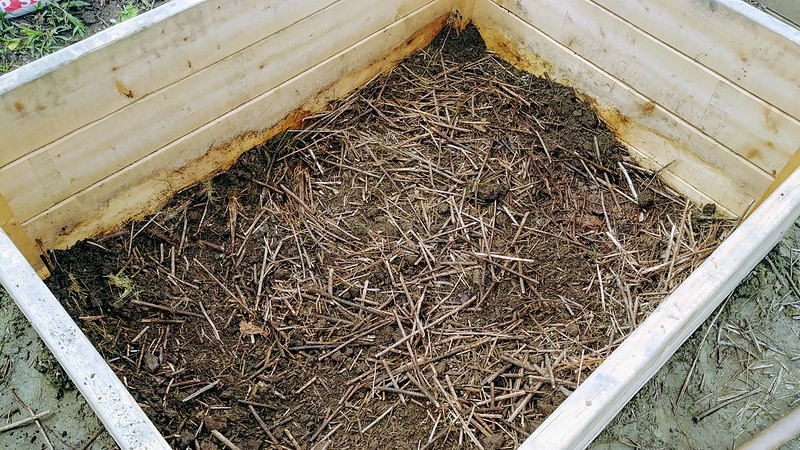
- Tree limbs or a few logs come next.

- Another layer of sticks and native dirt.

- More tree limbs.

- Decomposing organic matter (leaves).
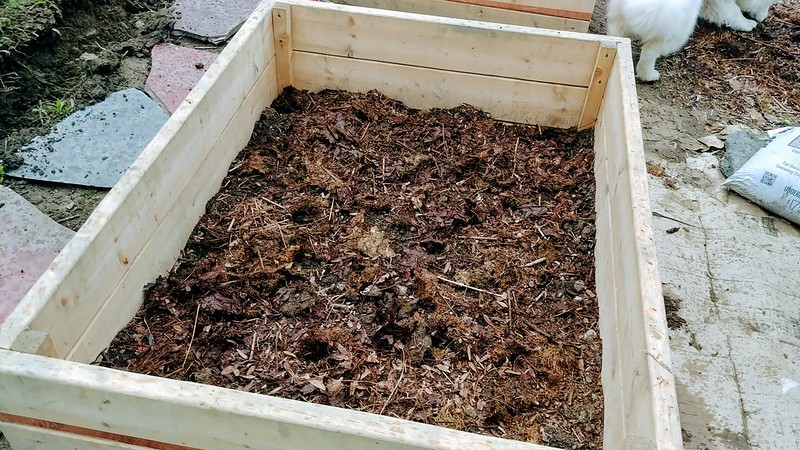
- The top 12" is the Joe Gardener Perfect Soil Recipe: 50% topsoil + 30% compost + 20% mixed organic matter.
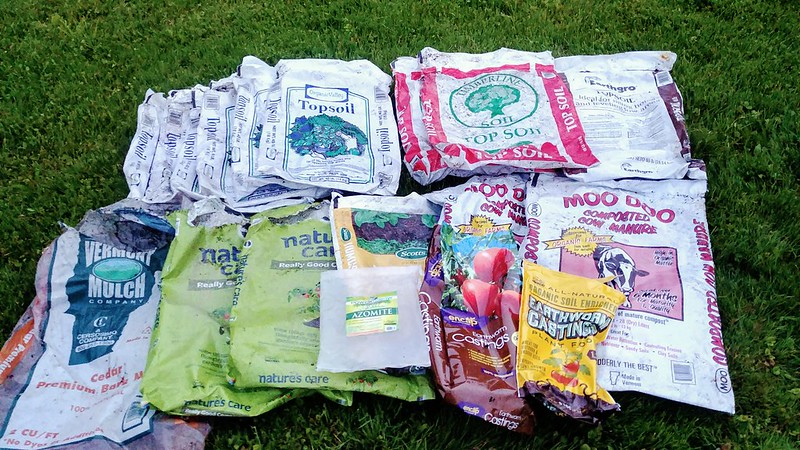
- I like to mix the soil ingredients as I go along, rather than doing some complicated tarp-mixing approach.

- Keep mixing up the perfect soil recipe until the raised bed is full.
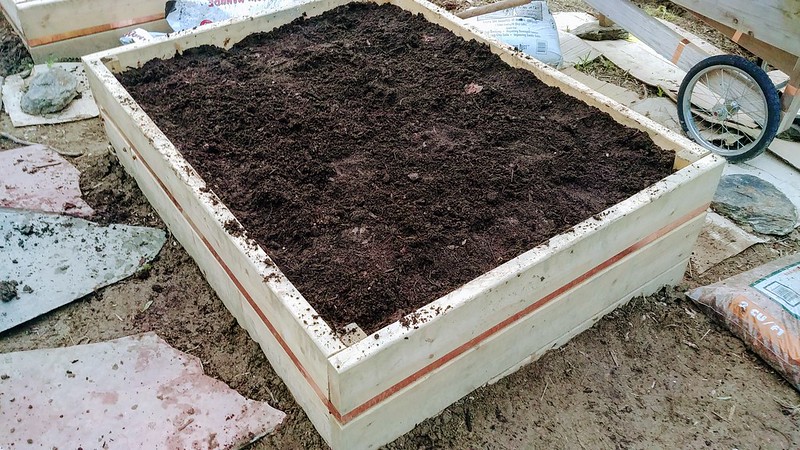
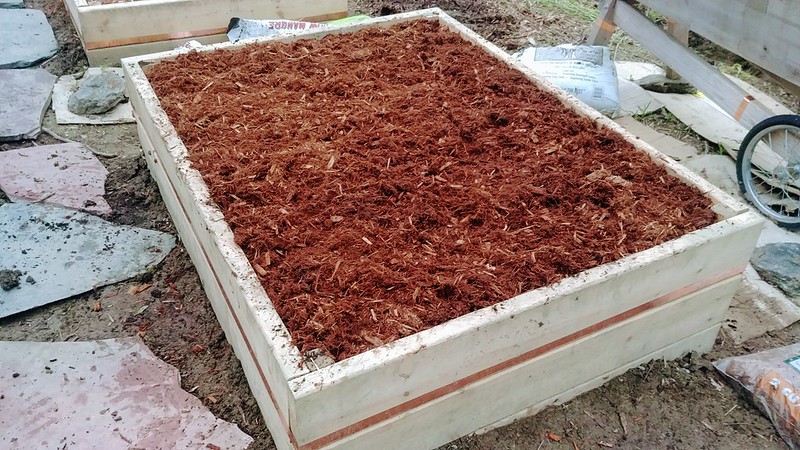
- Top off with some leaf mulch or softwood mulch.
- Plant!
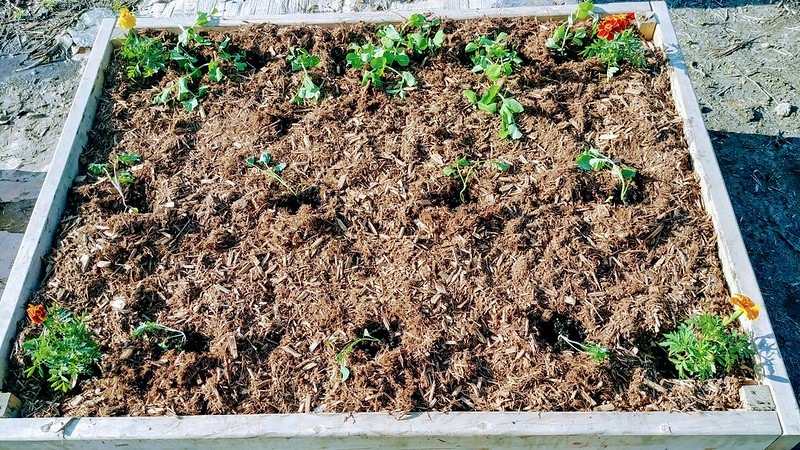
- At the end of the season, the dirt should have settled down a few inches, top with a few inches of leaf mulch or compost. (Do this as needed, as the tree limbs break down).


No comments:
Post a Comment
Thanks for visiting my blog! Comments are greatly appreciated.